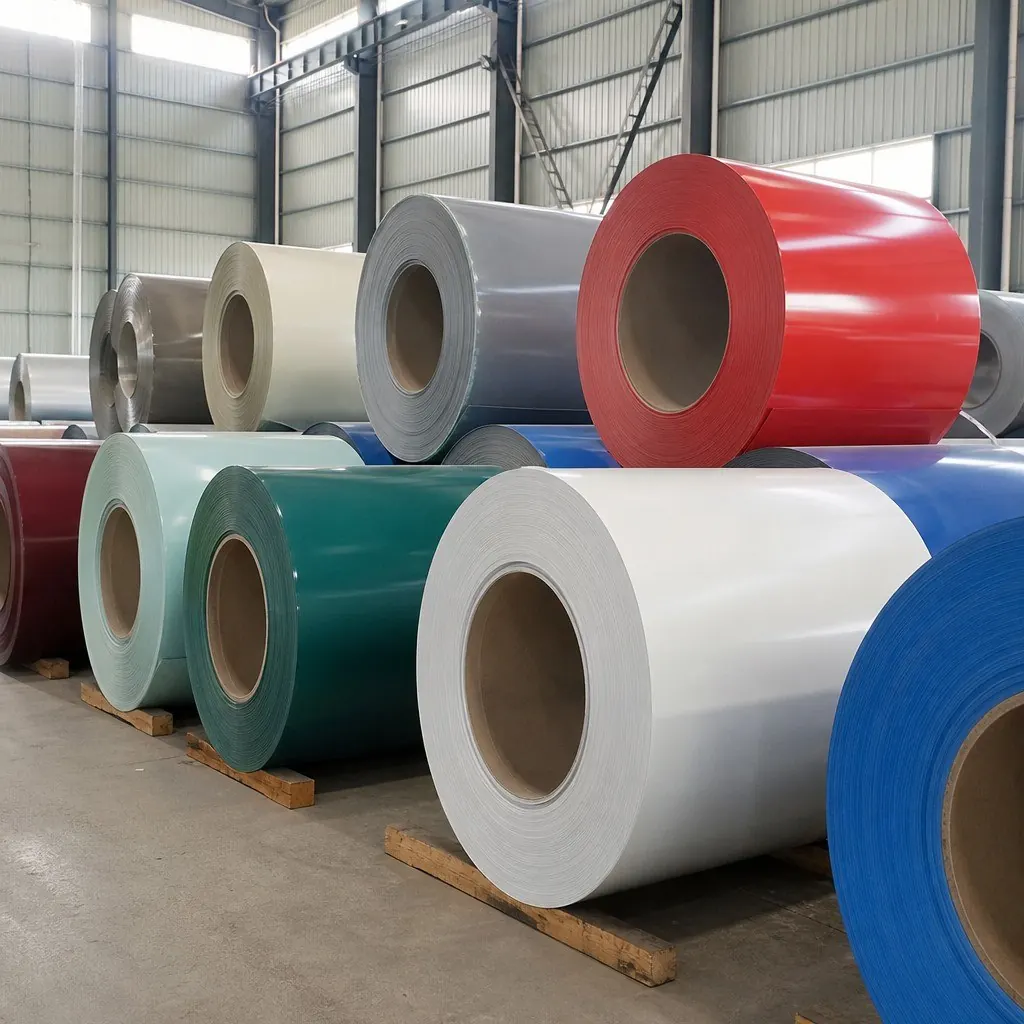
PPGI coil — pre-painted galvanized iron — is the material behind almost every coloured metal roof, wall cladding panel, cold-store lining and appliance housing you see across the Gulf. It is a galvanized steel coil that has been chemically pre-treated and then coated with a paint system on a continuous coil-coating line, so the colour and the corrosion protection are applied at the factory rather than on site.
For buyers, PPGI is the most specification-sensitive product in the flat-steel range. Two coils can carry the same RAL number, the same thickness and the same price per ton, and still differ by a decade of service life — because the coating system, the coating thickness and the zinc substrate behind the paint are all separately specified, and each one is easy to leave vague.
This guide covers what UAE and GCC buyers need to decide before ordering: which coating system suits which environment, how the substrate and coating combine to set service life, how RAL colours and colour consistency are controlled, what quality tests to demand, what drives the price, how MOQ works with colour schedules, and how the material is loaded and shipped to Jebel Ali and the other Gulf gateways.
1. What PPGI Coil Is, and When It Beats Plain GI
PPGI is a multi-layer product. Understanding the layers is what makes specification conversations productive:
- Base steel — cold-reduced or hot-rolled substrate, typically 0.25–1.20 mm for coated applications.
- Zinc coating — the hot-dip galvanized layer (Z120–Z275) that provides the actual corrosion protection.
- Chemical pre-treatment — a conversion coating that bonds the paint to the zinc and prevents delamination.
- Primer — typically 5–7 µm, formulated for adhesion and, in some systems, corrosion inhibition.
- Topcoat — typically 18–25 µm, carrying the colour, gloss and weather resistance.
The practical difference between the three coated products buyers compare most often:
| Product | Appearance | Corrosion protection from | Best for |
|---|---|---|---|
| GI coil | Metallic zinc finish | Zinc only | Ductwork, cable tray, industrial fabrication where colour is irrelevant |
| PPGI coil | Any RAL or custom colour | Zinc + paint barrier | Roofing and cladding, cold stores, appliances, signage |
| Galvalume / Aluzinc | Metallic, often pre-painted as GL | Zinc-aluminium alloy | Coastal roofing where maximum cut-edge protection is required |
Choose PPGI when the finished component will be visible and must hold its appearance, when you want to eliminate on-site painting, or when a paint film adds protection on top of the zinc. Choose plain GI when the part is hidden or will be painted after fabrication, because the colour premium buys nothing in that case.
2. Choosing the Coating System: PE, SMP, HDP or PVDF
This is the single decision that most affects both price and service life — and the one most often reduced to a single word (“polyester”) in an enquiry. There are four systems in common use:
| System | Typical topcoat DFT | Indicative weather life | UV / colour retention | Relative cost | Recommended environment |
|---|---|---|---|---|---|
| PE — polyester | 18–20 µm | 5–10 years | Moderate; chalking and fading under strong UV | Base | Indoor linings, sheltered applications, temperate climates |
| SMP — silicone-modified polyester | 20–22 µm | 10–15 years | Good; better heat and humidity resistance than PE | + | General outdoor roofing and cladding inland |
| HDP — high-durability polyester | 20–25 µm | 15–20 years | Very good; improved gloss and colour retention | ++ | Exposed roofing on commercial and industrial buildings |
| PVDF — fluoropolymer (e.g. Kynar 500 / Hylar 5000 based) | 23–27 µm | 20–30+ years | Excellent; the benchmark for colour and gloss retention | +++ | Coastal and high-UV Gulf projects where repainting is unacceptable |
Two clarifications prevent most Gulf specification errors:
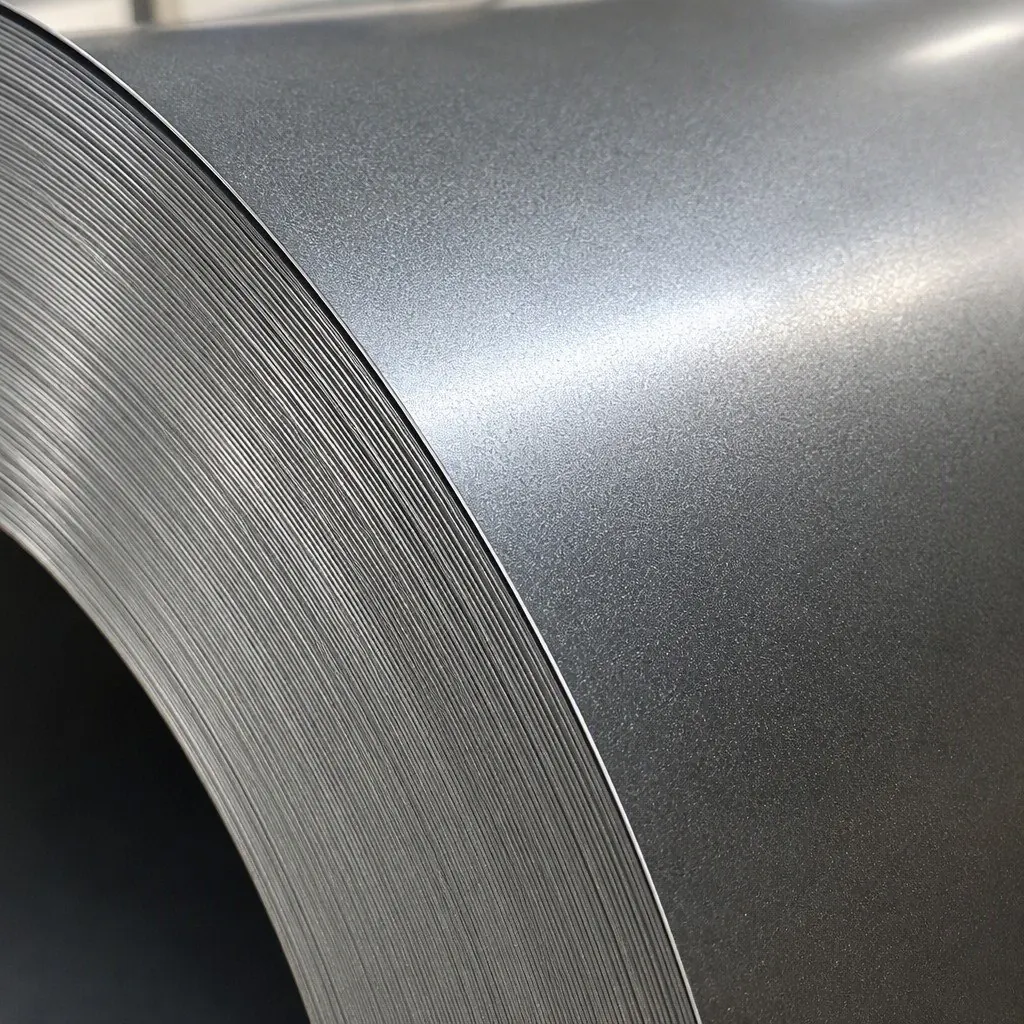
- The coating controls appearance; the zinc controls corrosion. A PVDF topcoat over a thin Z120 substrate will keep its colour beautifully while the steel behind it corrodes at the cut edges and fixing points. For a genuinely long-life roof you need both: adequate zinc and an appropriate paint system.
- Thicker paint is not automatically better paint. A 25 µm PE topcoat does not perform like a PVDF at the same thickness. The resin chemistry, not the film thickness, governs UV stability.
For the UAE, the workable rule is: PVDF over Z275 for coastal and high-visibility roofs; SMP or HDP over Z180–Z275 for general inland cladding; PE only for indoor or sheltered use.
3. The Substrate Combination That Sets Service Life
Once the coating system is chosen, service life is decided by combining it with the right zinc substrate. The following combinations cover the vast majority of Gulf requirements:
| Environment | Recommended substrate | Recommended coating | Why |
|---|---|---|---|
| Indoor, conditioned | Z120 | PE, 18–20 µm | No UV or salt exposure; economics dominate |
| Inland, sheltered | Z180 | SMP, 20–22 µm | Humidity and heat, limited direct salt |
| Inland, fully exposed | Z180–Z275 | HDP or SMP, 20–25 µm | Strong UV and thermal cycling |
| Coastal, exposed | Z275 | PVDF, 23–27 µm | Airborne salinity plus extreme UV; the combination used for high-specification Gulf roofing |
Galvalume (AZ150) substrates are also available pre-painted where cut-edge protection matters more than anything else, and are common on coastal industrial roofing. Where a project specifies “PPGI” without stating the substrate, ask — the difference between Z120 and Z275 is a real cost and a real lifespan difference that will not show up until years after handover.
4. RAL Colours and Colour Consistency
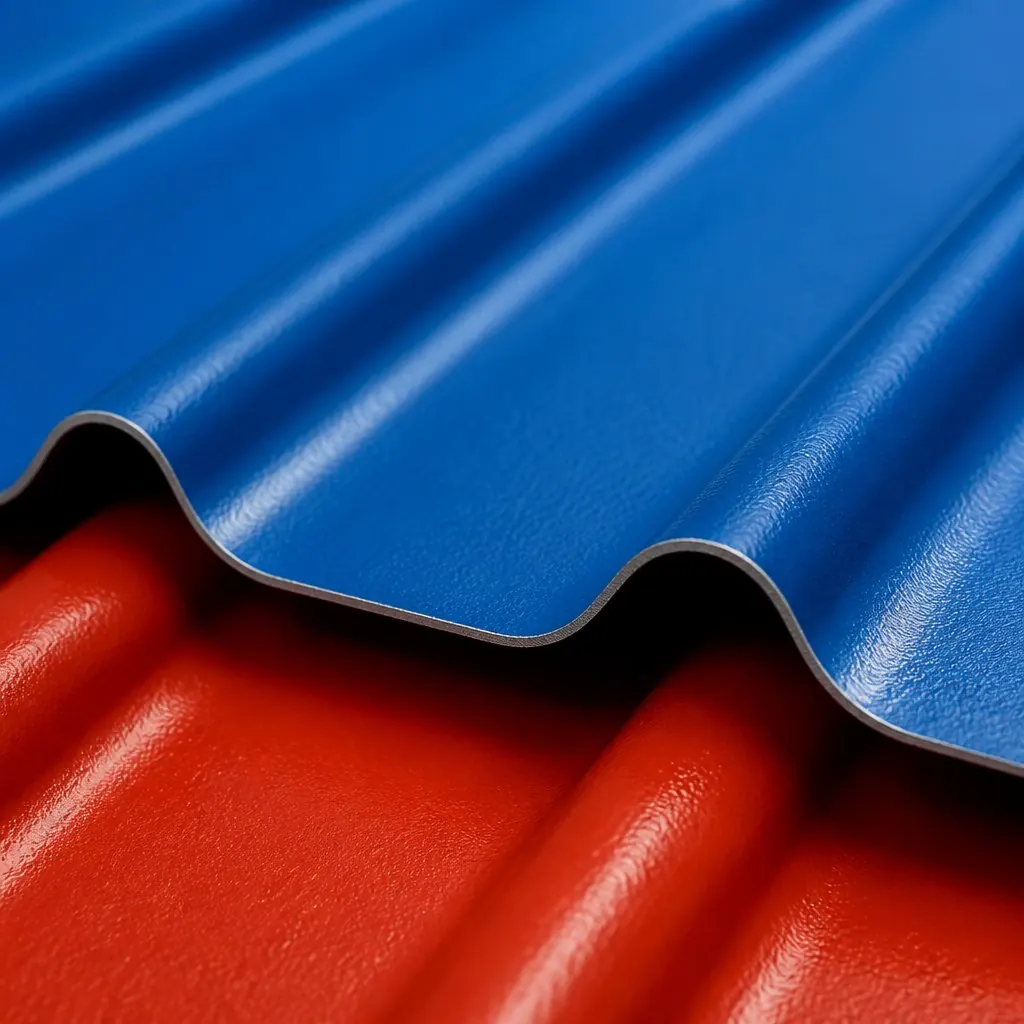
Colour is where PPGI enquiries most often become commercially complicated, because colour is ordered in batches and controlled by tolerance, not by absolute certainty. The colours below account for the large majority of Gulf demand:
| RAL | Description | Typical use |
|---|---|---|
| RAL 9010 / 9002 / 9003 | Pure white / off-white / signal white | Warehouse and factory roofing and wall cladding |
| RAL 1015 / 1014 | Light ivory / beige | Commercial buildings, residential roofing profiles |
| RAL 5010 / 5005 | Gentian blue / signal blue | Industrial units, sheds, brand-matched projects |
| RAL 3009 / 3020 | Oxide red / traffic red | Agricultural and industrial roofing, accent panels |
| RAL 6005 / 6020 | Moss green / chrome green | Landscaping and architectural applications |
| RAL 7016 / 7035 | Anthracite grey / light grey | Contemporary architectural cladding |
| RAL 8017 | Chocolate brown | Roofing where darker tones are specified |
Three practical points about colour that save money and disputes:
- Colour is manufactured to a tolerance, not to perfection. Colour difference is measured as ΔE (Delta E). A well-run coating line holds roughly ΔE ≤ 1.5 within a production batch and ΔE ≤ 2.0 between batches. Ask what tolerance your supplier commits to, and on which instrument.
- Order the whole project’s colour in one campaign where possible. Two batches of the “same” RAL can differ by a visible ΔE if the paint supplier changes or the line is re-set. For a large roof, one batch is safer than two.
- Custom colours carry a minimum. Matching a brand colour or a specific RAL outside common stock means a minimum paint quantity or a minimum tonnage per colour, because the coating line must be cleaned and set up for that shade. This is the most common reason a custom-colour quotation is higher than expected.
5. Specifications UAE and GCC Projects Commonly Specify
| Parameter | Common range for pre-painted material | Notes |
|---|---|---|
| Thickness | 0.25 – 1.20 mm | 0.40–0.60 mm dominates roofing and cladding profiles |
| Width | 600 – 1,250 mm | 1,000 and 1,200 mm are the Gulf standards for roll-forming |
| Zinc coating | Z120 – Z275 (AZ150 for Galvalume) | Z275 for coastal exposure |
| Coating system | PE / SMP / HDP / PVDF | State the exact system, not just “polyester” |
| Topcoat DFT | 18 – 27 µm depending on system | Confirm whether the figure is topcoat only or total (primer + topcoat) |
| Gloss level | 30 – 40% at 60° (standard); 10–25% (matt) | Matt finishes hide forming marks on standing-seam profiles |
| Coil inner diameter | 508 mm | Match to your roll-forming line |
| Coil weight | 2 – 8 MT | Confirm the maximum your handling equipment accepts |
| Protective film | Optional / specified | Recommended where cut sheets may rub during transport |
Get a PPGI Coil Quotation in Your RAL Colour
Send us the RAL or colour sample, thickness, width, coating system, zinc coating, tonnage and destination port. You will receive a costed quotation with the coating specification and container loading plan — usually the same business day.
Quotations answered within 24 hours · English, Arabic and French support
6. What Drives the Price of PPGI Coil
PPGI pricing is built from the same foundation as galvanized coil, plus a colour premium that is genuinely variable:
- Base steel. The cold-reduced or hot-rolled substrate, priced from the prevailing mill index and the largest single component.
- Zinc coating. Cost scales with coating weight, so Z275 carries a meaningful premium over Z120.
- Paint system and thickness. PE, SMP, HDP and PVDF sit on very different cost levels because the resins differ — fluoropolymer resins cost several multiples of standard polyester. Topcoat DFT adds on top of that.
- Colour and batch size. Standard stock colours ordered in full production runs are the cheapest. Custom shades, small colour quantities and frequent colour changes all carry set-up and cleaning costs.
- Processing. Slitting to width, cut-to-length, and profile forming if you buy finished sheets or panels rather than coil.
- Freight and documentation. Sea freight to Jebel Ali, Khalifa Port or Sharjah, plus inspection and certification if required.
Because the first two components track global markets, PPGI quotations are valid for a defined period rather than indefinitely. When comparing suppliers, compare the full specification — substrate, coating system, topcoat thickness and colour tolerance — rather than the price per ton alone, because that is where the real difference sits.
7. Quality Tests You Should Require on Pre-Painted Coil
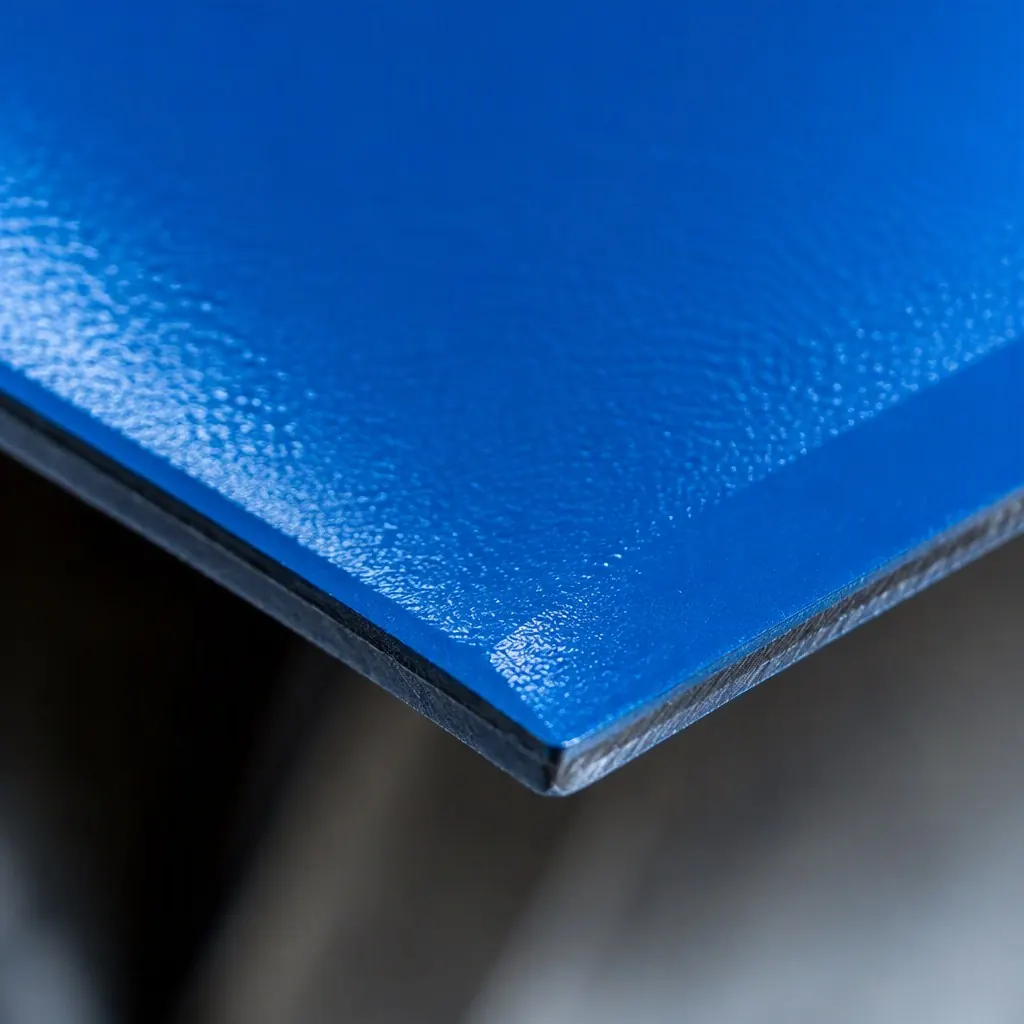
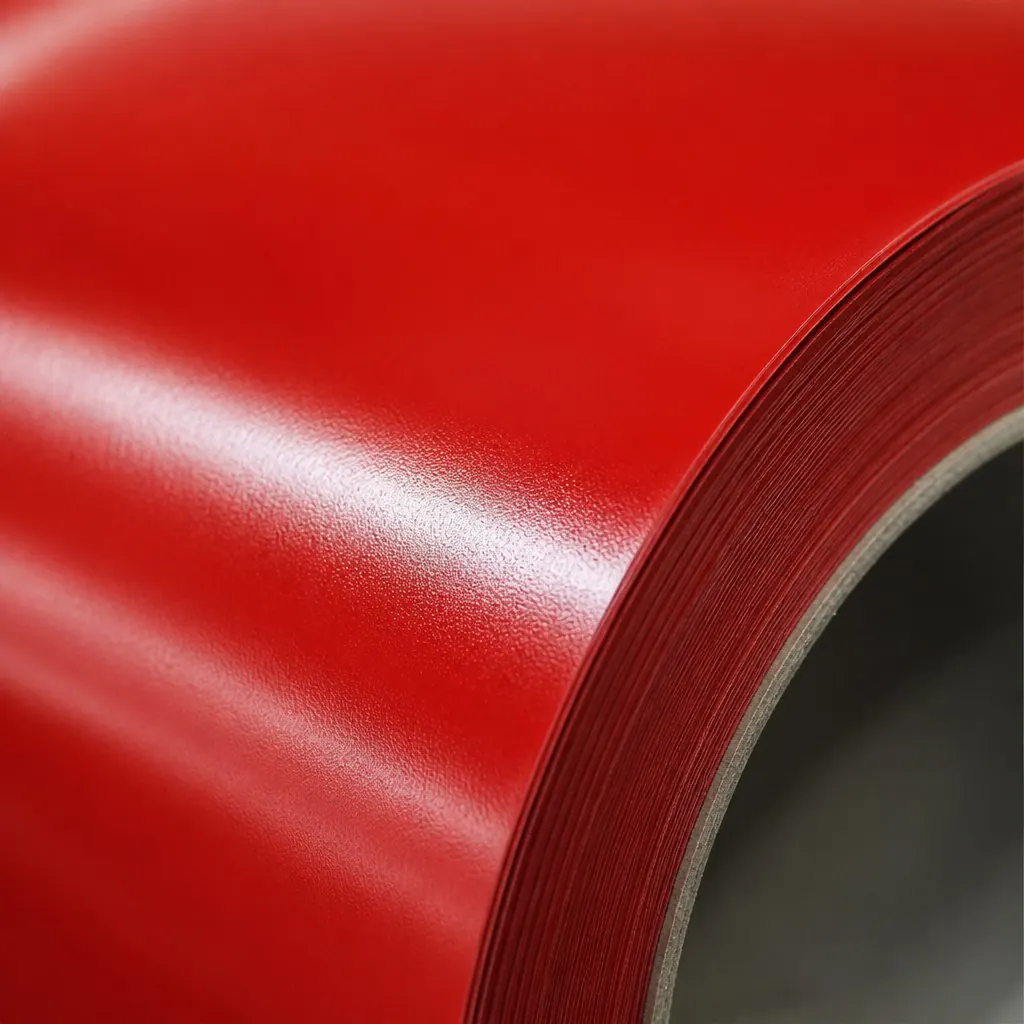
Paint performance is verified by a set of standard tests, and a supplier who can report them is a supplier who controls the line. Ask for the values, not just a conformity statement:
| Test | What it proves | Typical requirement |
|---|---|---|
| Adhesion (cross-hatch / T-bend) | The paint will not flake or peel during forming and fixing | No detachment at T-bend 0–1T for roofing grades |
| Pencil hardness | Surface resistance to scratching during handling | Typically ≥ HB–2H depending on system |
| Gloss at 60° | Consistency of appearance across the batch | Within ±5 units of the specified level |
| Colour difference (ΔE) | Colour consistency against the approved standard | ΔE ≤ 1.5 within batch; ≤ 2.0 between batches |
| Reverse impact | Resistance to cracking when the sheet is deformed | Per the paint system supplier’s data sheet |
| Salt spray | Corrosion resistance of the complete system including cut edges | Typically 500–1,000 hours depending on specification |
| MEK rub / cure test | The coating is fully cured and will not soften in service | Per system specification |
Two of these deserve particular attention on Gulf projects. Adhesion is where forming failures show up — a roof panel bent over a ridge that cracks its paint will fail visibly within a season. And salt spray results should be read with the substrate in mind: the test speaks to the complete system, so a good paint result over an inadequate zinc coating does not mean the assembly will survive a coastal site.
8. MOQ, Colour Schedules and Lead Time
PPGI buying differs from plain galvanized buying in one important way: the minimum order is governed by colour as well as by size. The commercial framework most suppliers serving the Gulf work to is:
- Minimum order quantity: typically 25 metric tons per size, and each colour in the order is normally subject to its own minimum quantity because the coating line must be set up and cleaned for that shade.
- Standard colours (RAL 9010, 9002, 5010, 6005, 7016 and similar) can often be supplied in smaller colour quantities than custom shades, and can sometimes be combined more flexibly within a container.
- Production lead time: 15–25 days after specification, colour approval and deposit confirmation.
- Sea transit to the UAE: 18–25 days to Jebel Ali, Khalifa Port or Sharjah.
- Payment terms: T/T, L/C at sight, D/P, and open account terms for established repeat buyers, as agreed in the quotation.
Colour approval is the step that most often delays a PPGI order, so handle it early:
- State the RAL number, or provide a physical colour sample if the requirement is a brand colour.
- Confirm the coating system and topcoat thickness you want — this is what determines the price, not the colour alone.
- Approve a colour sample or first-article panel before the full production run.
- Once approved, keep the reference; it becomes the contractual standard for the batch.
For a project with more than one roof area or phase, order the full colour requirement in a single campaign if the budget allows. It is the simplest way to avoid a visible colour step between two halves of the same building.
9. Container Loading and Surface Protection
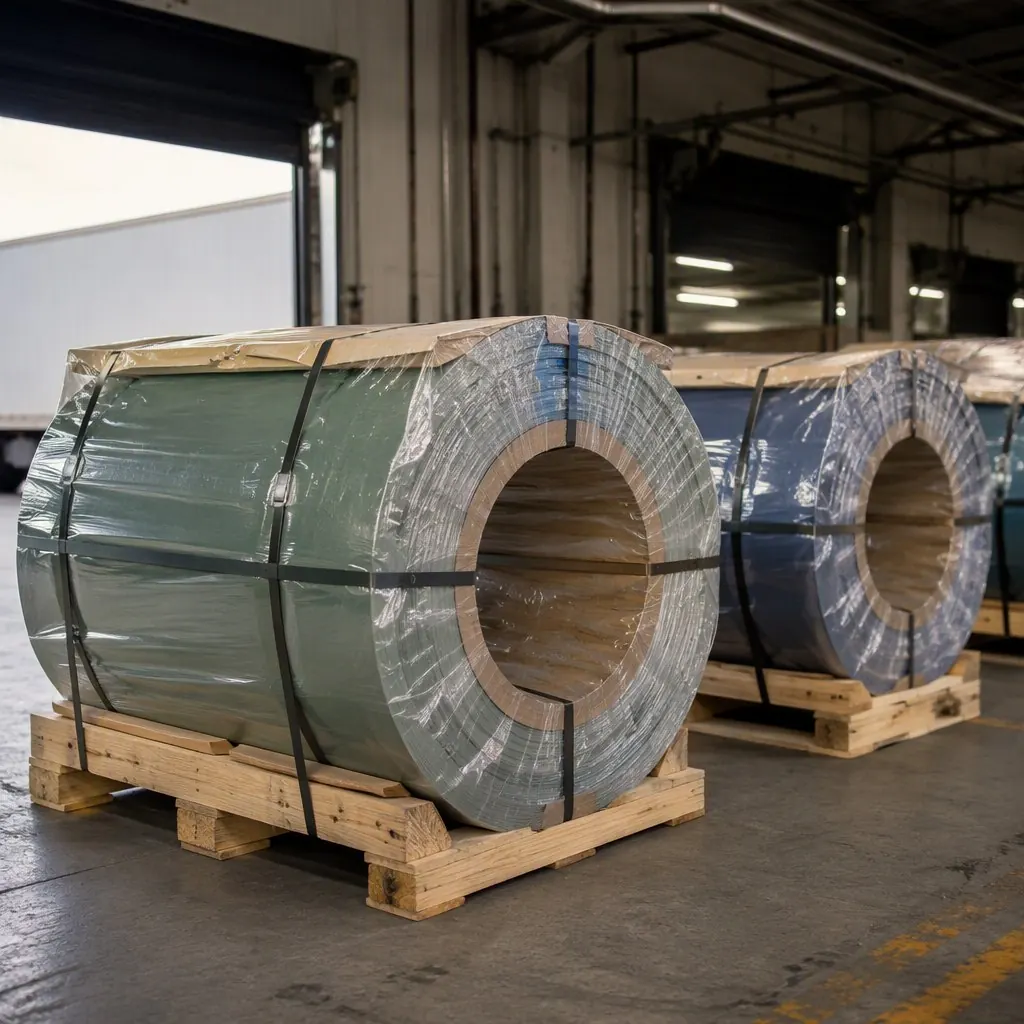
Pre-painted coil is weight-limited in the same way as galvanized coil, so the loading figures are familiar:
| Container | Max payload (approx.) | Typical PPGI load | Notes |
|---|---|---|---|
| 20 GP | ≈ 28 MT | 25 – 27 MT | Standard for single-size and mixed-colour orders |
| 40 HQ | ≈ 28 MT | 25 – 27 MT | Extra volume rarely usable because of the weight limit |
| 40 GP | ≈ 28 MT | 24 – 26 MT | Ceiling height constrains larger coil diameters |
What is different for PPGI is that the surface is the product. A coil that arrives with scuffed paint has lost part of its value even though the steel and the coating weight are perfect. The protective measures that matter:
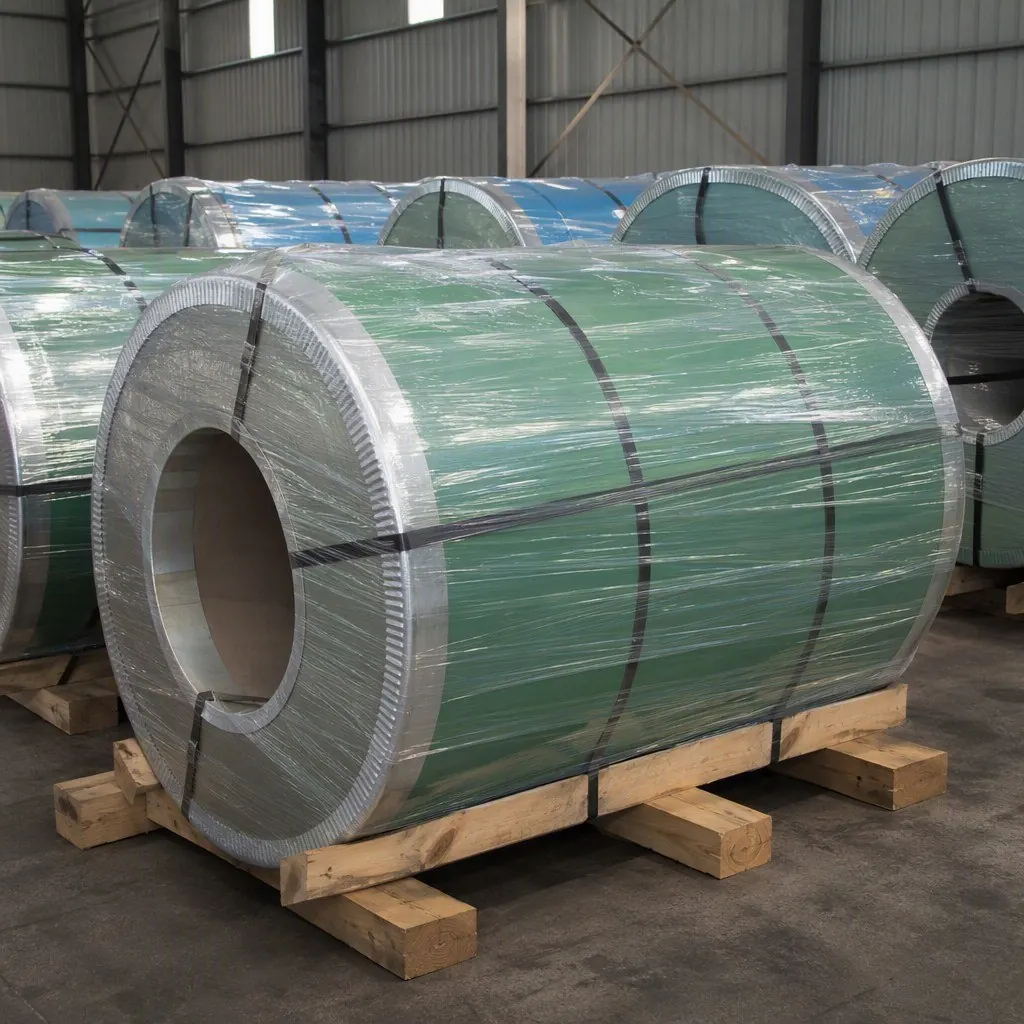
- Edge and face protection — coils are wrapped and the vulnerable outer laps protected so that coil-to-coil contact during a sea voyage does not mark the finish.
- Moisture control — the paint film must be fully cured before packing, and the container should be dry and free of condensation at loading.
- Dunnage and strapping — wooden dunnage and steel banding prevent movement; a coil that shifts in transit arrives with both surface damage and edge deformation.
- Loading photographs — pictures of the stowage and strapping, taken before the doors close, are the buyer’s evidence if a claim arises.
Where the material will be cut into sheets before delivery on site, a protective film can be specified. It is worth discussing with the supplier, because film that stays on too long in high temperatures can become difficult to remove — the instruction on removal time should come with the coil, not with the complaint.
10. Where PPGI Is Used in GCC Projects
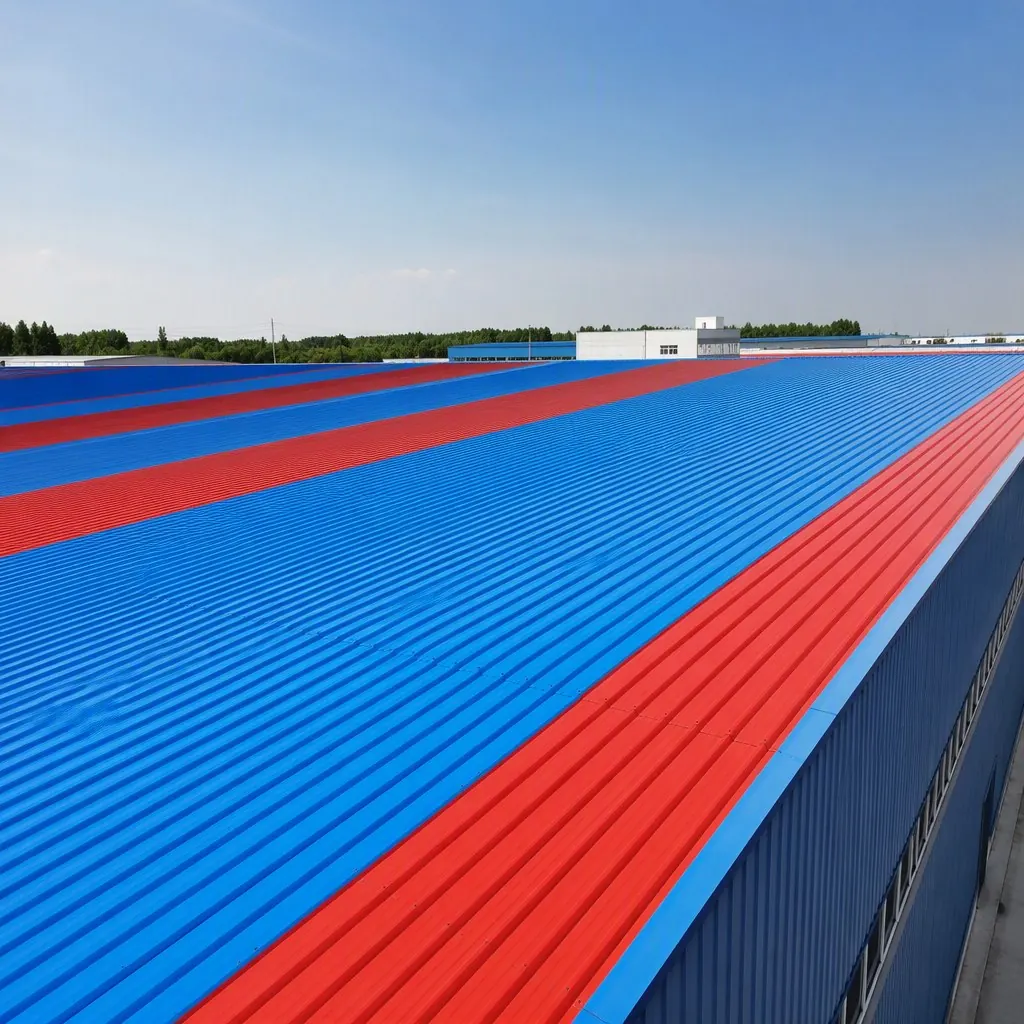
Understanding the application tells you what to specify, and each application tends to have its own conventions:
- Roofing and wall cladding — by far the largest use. Trapezoidal, corrugated, standing-seam and box profiles are roll-formed from 0.40–0.60 mm pre-painted coil. Coastal projects should specify Z275 substrate with PVDF; inland commercial work commonly uses SMP or HDP over Z180.
- Cold stores and insulated panels — pre-painted sheets form the facing of PIR and mineral-wool panels. The requirement is a flat, defect-free surface rather than extreme weather resistance, so PE or SMP over Z120–Z180 is often sufficient.
- Appliance housings and equipment enclosures — air-conditioning units, electrical cabinets and white goods use thinner gauges with tight colour consistency, usually PE systems.
- Signage and architectural features — where a specific colour match is essential and batch consistency matters more than twenty-year weather life.
- Warehouse and factory cladding — large volumes of light colours (RAL 9002 and 9010 especially) on industrial buildings, where thermal performance favours light finishes.
The Gulf-specific consideration is the combination of intense ultraviolet radiation and airborne salinity. Ultraviolet drives colour fade and chalking; salinity attacks cut edges and fixings. A specification that addresses only one of the two — a premium paint on a thin zinc coating, or a heavy zinc coating under a basic polyester — solves half the problem, and the half that was neglected is the one that will require attention first.
11. Comparing Your Sourcing Options: Mill-Direct, Trader or Stockist
Most GI coil enquiries in the Gulf are ultimately answered by one of three supply routes, and the right choice depends less on the headline price than on how much flexibility and traceability the order actually needs. The table below sets out how the three differ in practice.
| Consideration | Mill-direct manufacturer | Trading company | Local stockist |
|---|---|---|---|
| Price level | Lowest — no intermediary margin | Typically 3–8% above mill level | Highest — carries stock, handling and local cost |
| Minimum quantity | 25 MT per size, full container loads | Lower minimums; can consolidate mixed sizes | Smallest quantities, often by the coil or sheet |
| Specification flexibility | Full — coating weight, width, slitting, cut-to-length, surface treatment | Limited to what a mill already produces | Restricted to what is in stock |
| Traceability | MTC to EN 10204 3.1 with heat number linked to the coil | Documents pass through a second party | Often re-issued; original heat data may not follow |
| Lead time | 15–25 days production plus sea transit | Adds handling and consolidation time | Immediate for stock items |
| Inspection access | Third-party inspection before loading at the mill | Inspection arranged remotely | Inspection after arrival only |
| Best suited to | Project orders and repeat programmes where cost and specification control matter | Buyers needing smaller mixed orders | Urgent repairs and small top-ups |
A second comparison matters just as much in the Gulf: an integrated multinational mill group against a direct Chinese manufacturer. Multinational producers are strong where a project specification names a producer, where a long-standing brand approval already exists, or where financing is tied to a particular supplier list. A direct Chinese manufacturer competes on cost, on the willingness to run non-standard coating weights and widths, and on combining several sizes or finishes in one shipment. Neither route is universally better — the deciding questions are whether your specification names a producer, and whether your schedule can absorb a production lead time.
Five questions separate a capable supplier from a brochure: can you quote the exact coating weight and thickness tolerance in writing? Will the MTC carry the heat number through to the coil? Who inspects before loading? What happens if the coating weight tests low on arrival? And can you name three projects in my market using this specification? A supplier who answers all five without hesitation is worth a trial order.
12. Frequently Asked Questions
What is the difference between PPGI and GI coil?
GI coil is galvanized steel with a bare zinc coating — it is metallic in appearance and is protected by zinc alone. PPGI coil is the same galvanized substrate with a chemical pre-treatment, a primer and a coloured topcoat applied on a continuous coating line. In practice the zinc coating provides the corrosion protection and the paint system provides the colour, the appearance and additional protection. PPGI is chosen where the finished product will be visible or where on-site painting is to be avoided.
Which coating system should I choose for a UAE project?
For coastal and high-visibility roofing, PVDF over a Z275 substrate is the durable specification, with 20–30 years of weather life and the best colour retention under Gulf UV. For general inland cladding, SMP or HDP over Z180–Z275 gives a good balance of performance and cost. PE should be limited to indoor or sheltered applications such as cold-store linings, where UV exposure is minimal.
What is the MOQ for PPGI coil in a custom colour?
The MOQ is typically 25 metric tons per size, and each colour is normally subject to its own minimum quantity because the coating line must be cleaned and set up for that shade. Standard stock colours are generally more flexible than custom shades. If your project needs several colours in smaller quantities, tell us the full colour schedule and we will advise how to combine them most economically.
How much does PPGI coil cost?
A PPGI price is made up of the base steel cost, the zinc coating cost (which scales with Z120 through Z275), the paint system and its thickness (PE, SMP, HDP and PVDF sit at very different cost levels), colour and batch size, processing such as slitting or cut-to-length, and freight and documentation. Because the steel and zinc components follow global markets, quotations are valid for a defined period. Send us your RAL, coating system, thickness, tonnage and destination port for a costed quotation.
Which RAL colours are available?
All standard RAL shades can be produced. The most frequently ordered in the Gulf are RAL 9010, 9002 and 9003 (whites), RAL 1015 (light ivory), RAL 5010 and 5005 (blues), RAL 3009 and 3020 (reds), RAL 6005 and 6020 (greens), RAL 7016 and 7035 (greys) and RAL 8017 (brown). Custom and brand colour matching is available, normally against a physical sample, with a colour sample or first-article panel approved before the main production run.
How many tons of PPGI coil fit in a 20GP or 40HQ container?
A 20GP container takes approximately 25–27 metric tons of pre-painted coil, and a 40HQ container takes approximately the same 25–27 metric tons. Like all steel coil, the load is limited by weight rather than volume, so upgrading container size does not meaningfully increase the tonnage. The extra consideration with PPGI is surface protection rather than capacity: stowage, wrapping and strapping must be arranged so the paint finish arrives unmarked.
What quality tests should I require with a PPGI shipment?
Ask for adhesion results, normally by cross-hatch or T-bend, which show the paint will survive forming and fixing without flaking; pencil hardness; gloss at 60 degrees; colour difference against the approved standard, expressed as ΔE, typically within 1.5 in a batch and 2.0 between batches; reverse impact resistance; salt spray hours for the complete system including cut edges; and an MEK rub or equivalent cure test. A supplier who reports actual values rather than a statement of conformity is a supplier who controls the coating line.
How long does production and shipping to the UAE take?
Production typically takes 15–25 days after specification, colour approval and deposit confirmation, followed by 18–25 days of sea transit to Jebel Ali, Khalifa Port or Sharjah. Colour approval is the step most likely to extend a PPGI schedule, so approving the sample early — and keeping the approved reference for the batch — protects the delivery date. Public holidays in China and the Gulf also compress effective working days and should be allowed for on projects with fixed installation dates.
Send Us Your PPGI Colour and Specification
Tell us the RAL or colour sample, coating system, thickness, width, tonnage and destination port. You will receive a costed quotation, the coating specification and a container loading plan — usually within one business day. Arabic and French enquiries are welcome.
Request a Quote
Chat on WhatsApp
Direct factory supply from Tianjin, China · MTC and coating test values with every shipment · Shipping to Jebel Ali, Khalifa Port, Dammam, Jeddah, Hamad Port and Sohar