If you buy steel for projects in the Emirates, you already know that GI coil — hot-dip galvanized steel coil — is one of the most frequently quoted items on any commercial enquiry list. It is the material behind roofing and cladding profiles, HVAC ductwork, cable trays, purlins, signage and light-gauge framing. It is also the product where two suppliers can quote for the “same” specification and land 15% apart, because zinc coating, thickness tolerance and surface treatment are easy to state loosely and expensive to get wrong.
This guide is written for UAE and GCC buyers who are sourcing rather than browsing. It covers the specifications UAE projects actually specify, what drives the price you are quoted, how MOQ and container loading work in practice, how the material reaches Jebel Ali and the other UAE gateways, the documents you should demand, and the seven checks that separate a reliable GI coil supplier from an expensive lesson.
If you already have a specification and need a price, you can send it to us directly — most quotes go out the same business day.
1. What UAE Buyers Mean by “GI Coil”
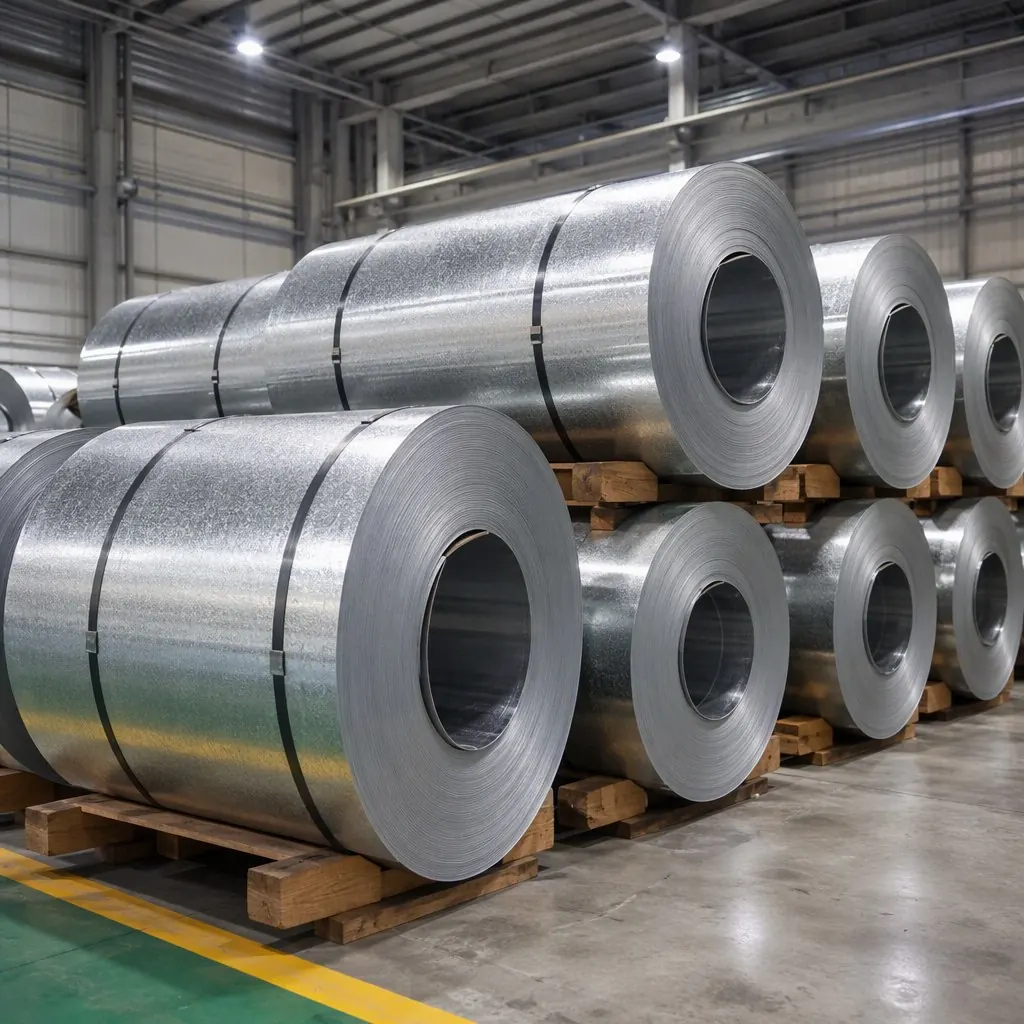
GI coil is cold-reduced or hot-rolled steel strip that has passed through a continuous hot-dip galvanizing line, where it is coated on both sides with zinc to protect the base steel from corrosion. In the Gulf market the term is used loosely for three different products, and confusion between them is the single most common cause of rejected shipments:
| Product | Coating | Typical use in the UAE |
|---|---|---|
| GI coil (galvanized) | Zinc, both sides | Ductwork, cable tray, purlins, general fabrication |
| PPGI coil (pre-painted) | Zinc + paint system | Roofing and cladding, signage, appliances |
| Galvalume / Aluzinc | Zinc-aluminium alloy | Coastal roofing where long-life corrosion resistance is required |
Ordinary GI coil — the subject of this guide — is sold by coating weight, thickness, width and coil weight. Those four numbers, plus the surface treatment, define the product. Everything that follows in a quotation is a commercial variable wrapped around them.
2. Standard Specifications UAE and GCC Projects Specify
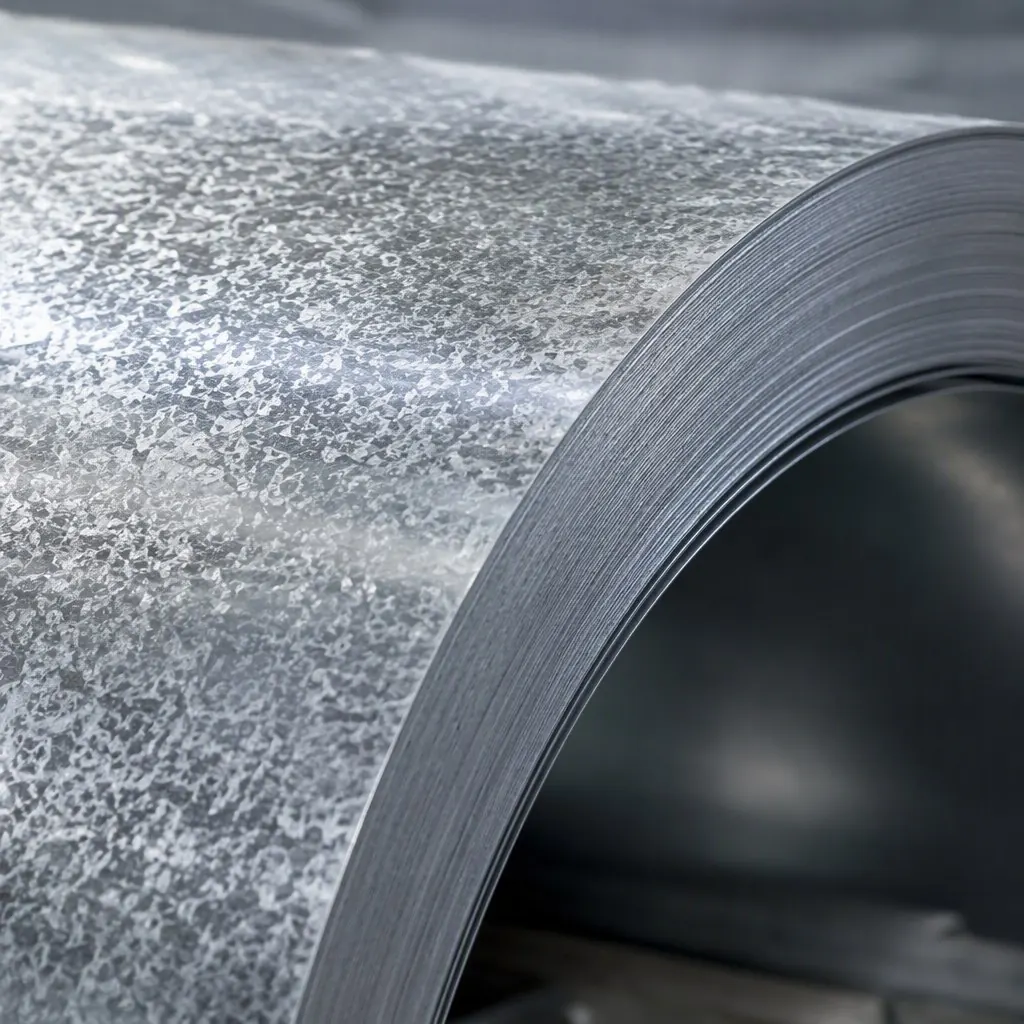
Almost every enquiry we receive from the Emirates references one of three standards. They are technically compatible in most respects, but they express coating and tolerance differently, which is where misunderstandings start.
2.1 Coating designation and what it actually means
Under ASTM A653/A653M and EN 10346, the “Z” number states the total zinc coating weight on both surfaces combined, in grams per square metre. This is the number that decides how long the sheet lasts in a coastal environment.
| Designation | Coating weight (both sides, total) | Approx. coating thickness per side | Typical environment |
|---|---|---|---|
| Z100 | 100 g/m² | ≈ 7 µm | Indoor, dry, temporary works |
| Z120 | 120 g/m² | ≈ 8.5 µm | Indoor ductwork and light fabrication |
| Z180 | 180 g/m² | ≈ 13 µm | Semi-exposed, inland construction |
| Z275 | 275 g/m² | ≈ 19 µm | Coastal and outdoor UAE projects |
Z180 and Z275 dominate UAE specification because of the region’s humidity, airborne salinity and high summer temperatures. When a buyer compares a Z120 quotation with a Z275 quotation and wonders why the difference is so large, the answer is in this table: Z275 uses roughly 2.3 times more zinc than Z120 per tonne of steel.
2.2 Dimensions commonly ordered for the UAE market
| Parameter | Common range | Notes |
|---|---|---|
| Thickness | 0.30 – 3.00 mm | 0.40 – 0.80 mm most common for ductwork and roofing |
| Width | 600 – 1,500 mm | 1,000 and 1,219 mm are the Gulf standards |
| Coil inner diameter | 508 mm (also 610 mm) | Confirm to match your slitting or roll-forming line |
| Coil outer diameter | Up to 1,500 mm | Limited by container and handling equipment |
| Coil weight | 2 – 8 MT per coil | Affects loading pattern and lifting equipment on site |
2.3 Surface treatment — the specification line buyers forget
Two coils with identical zinc coating can behave completely differently on site depending on surface condition:
- Chromate passivation — applied to prevent white rust during sea transport. Essential for shipments to the Gulf.
- Oiled / anti-finger print — improves formability and handling; specify whether oil is acceptable for your downstream process.
- Skin-passed — improves surface flatness and paint adhesion, important if the coil will be pre-painted locally.
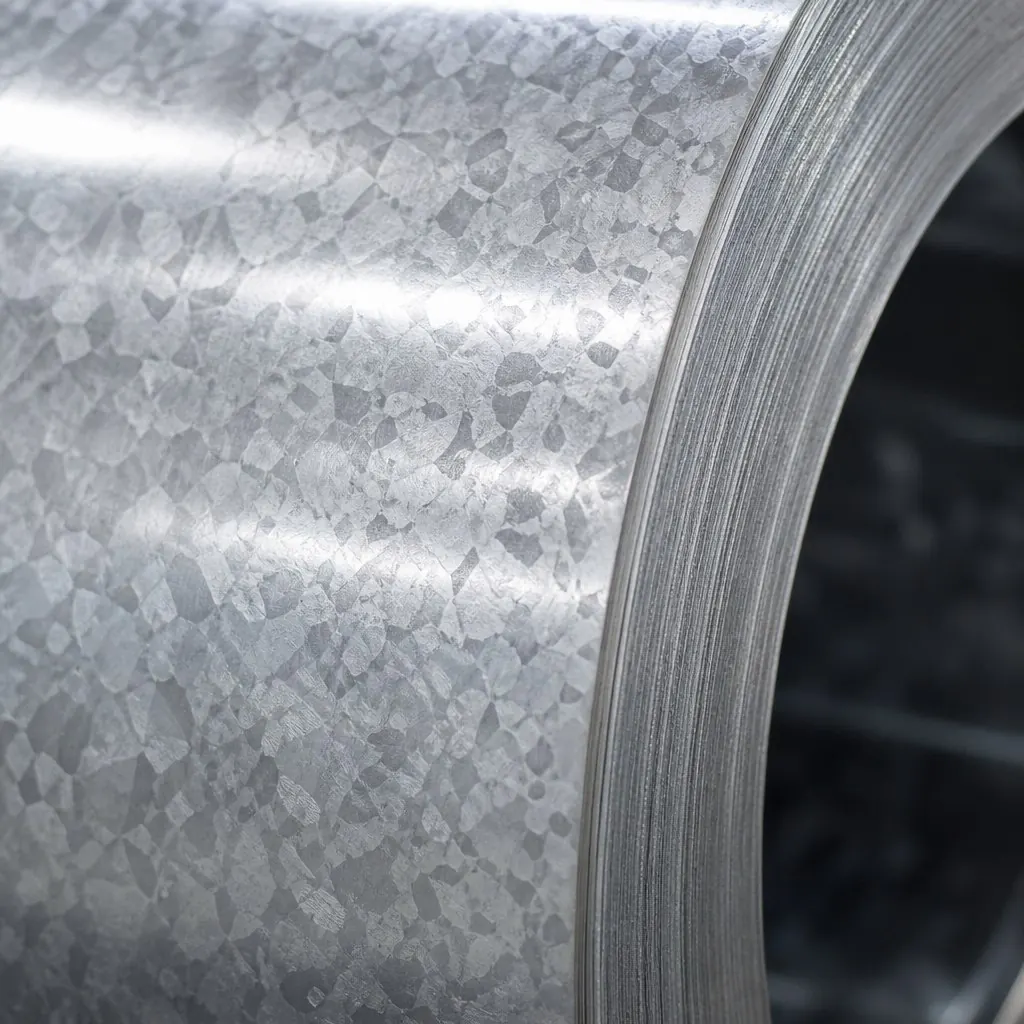
- Spangle — regular spangle gives the familiar crystalline appearance; minimized spangle is smoother and preferred before painting.
3. What Drives the Price of GI Coil in the UAE
GI coil is a commodity, so buyers often assume the price should be identical everywhere. In reality, a delivered price to Dubai is built from six components, and each one can move independently:
- The base steel. Hot-rolled or cold-rolled substrate, priced from the prevailing mill index. This is usually the largest single component and it moves weekly.
- Zinc. The galvanizing cost tracks the LME zinc price multiplied by coating weight. This is why Z275 and Z120 are not close in price.
- Processing. Continuous galvanizing line time, skin-passing, slitting, and cut-to-length if you need sheets rather than coil.
- Inland freight and handling. Moving coil from the mill to the port, plus lifting, strapping and container loading.
- Sea freight and surcharges. Varies by carrier, season and port pair; Jebel Ali, Khalifa Port and Sharjah carry different rates.
- Terms and documentation. FOB versus CIF, third-party inspection, and certification requirements all carry cost.
Because the first two components move with global markets, a GI coil price is only valid for a defined period — typically a few days to two weeks. Any supplier quoting a fixed price for six months is either hedging heavily or planning to renegotiate.
Why two quotations for “the same” Z275 coil can differ by 15%
When quotations diverge sharply, the difference is rarely profit. It is usually one of these:
- Nominal versus minimum thickness. A coil produced to “0.50 mm nominal, −10% tolerance” can arrive at 0.45 mm. You pay for 0.50 mm and receive 10% less steel.
- Coating weight measured differently. Some offers quote single-side coating weight and present it as if it were the double-side figure.
- Substitute substrate. Commercial quality (CQ) base steel priced against structural quality with no visible difference on the certificate summary.
- Spangle or surface grade. Second-choice surface, unpassivated, or un-oiled material is cheaper and corrodes faster in Gulf conditions.
Compare GI Coil Prices for Your UAE Specification
Send us the thickness, width, zinc coating, tonnage and destination port. We reply with a costed quotation, the mill test certificate format and container loading plan — usually the same business day.
Quotations answered within 24 hours · English, Arabic and French support
4. MOQ, Order Scheduling and Production Lead Time
For most GI coil suppliers serving the Gulf, the commercial starting point is straightforward:
- Minimum order quantity: typically 25 metric tons per size. Mixed sizes in a single container load are accepted for distributors.
- Production lead time: 15–25 days after specification and deposit confirmation, depending on thickness, coating and mill scheduling.
- Sea transit to the UAE: 18–25 days to Jebel Ali, Khalifa Port or Sharjah, depending on carrier and routing.
- Payment terms: T/T, L/C at sight, D/P, and open account for established repeat buyers, as agreed in the quotation.
Two scheduling points matter more than buyers expect. First, coating weight affects line time: heavy Z275 material runs slower than Z120 on the same line, so a large Z275 order placed in a busy quarter can extend beyond the nominal production window. Second, Chinese New Year and the Ramadan/Eid periods compress effective working days on both the production and shipping sides. If your project has a hard installation date, book the production slot before the calendar does it for you.
5. Container Loading: How Much GI Coil Fits in a 20GP or 40HQ
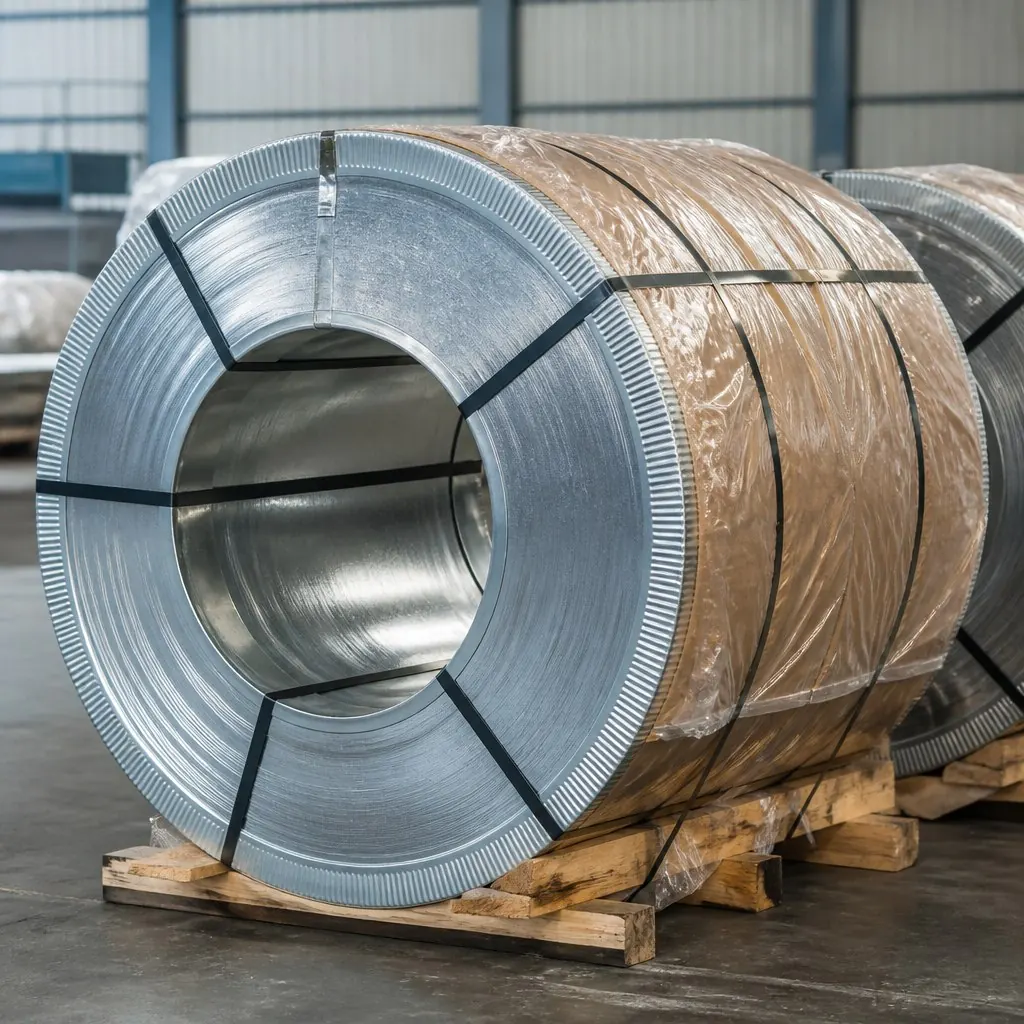
This is the calculation that most often decides whether a landed price works. Steel coil is weight-limited, not volume-limited: a container fills up long before it looks full. The practical figures for GI coil export from China to the Gulf are:
| Container | Max payload (approx.) | Typical GI coil load | Practical notes |
|---|---|---|---|
| 20 GP | ≈ 28 MT | 25 – 27 MT | Most common for single-size trial and mixed orders |
| 40 HQ | ≈ 28 MT | 25 – 27 MT | Extra volume rarely usable because of weight limits |
| 40 GP | ≈ 28 MT | 24 – 26 MT | Ceiling height limits larger coil diameters |
Because the constraint is tonnage rather than space, a 40-foot container does not carry meaningfully more GI coil than a 20-foot container. Buyers who assume a 40HQ halves their freight per ton are usually disappointed. The genuine savings come from two places instead:
- Consolidating sizes. One container carrying three sizes at 8 MT each reaches the same 25 MT as a single-size load, while cutting inventory risk.
- Choosing coil weight to match handling. Coils of 3–5 MT are manageable with standard forklifts at destination; 8 MT coils may need heavier equipment, which the buyer pays for either way.
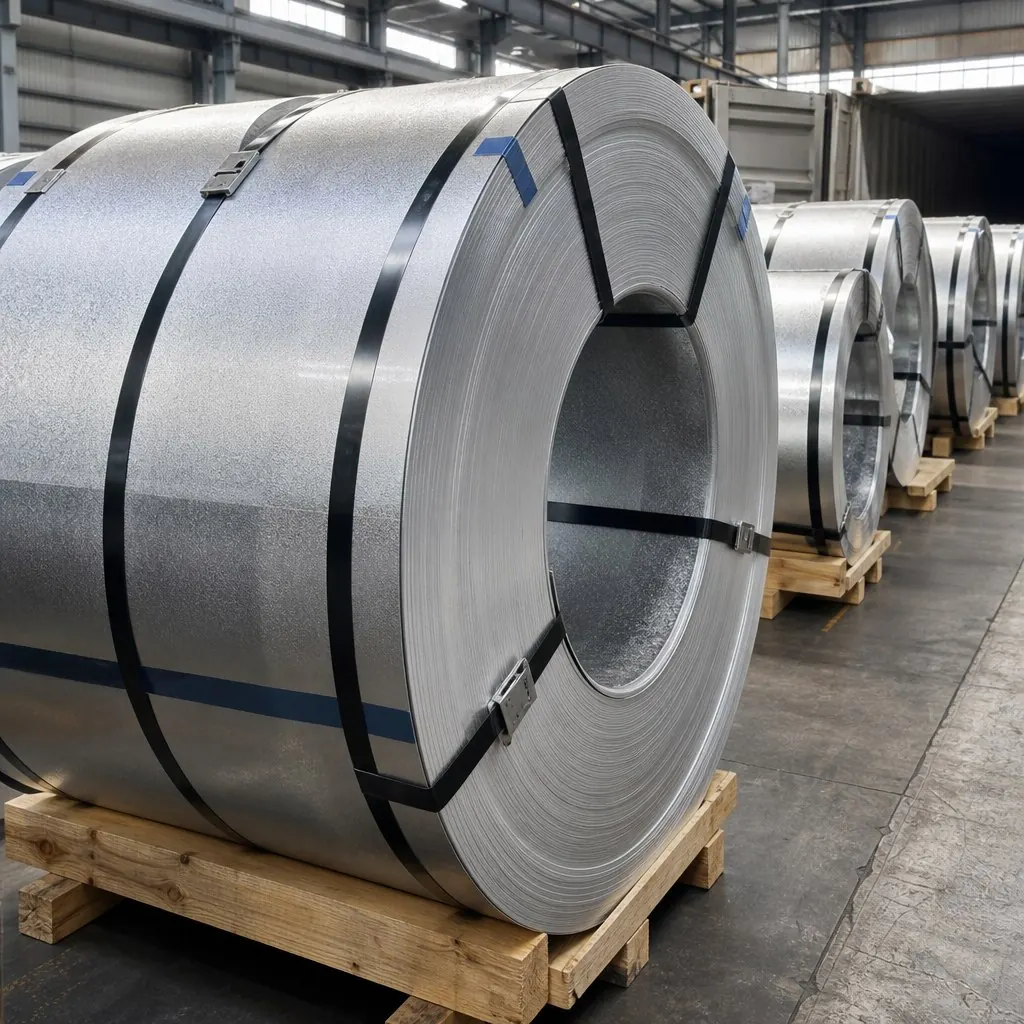
Every coil is strapped and secured with wooden dunnage and steel banding for sea transport, and we photograph the loading pattern before the doors close — a document that has resolved more than one argument at destination.
6. Shipping GI Coil to Jebel Ali, Khalifa Port and Other UAE Gateways
The UAE is one of the easiest Gulf markets to serve from a Chinese mill, because it offers multiple deep-water gateways with frequent sailings and efficient discharge. The choice of port changes both the freight rate and the inland cost your customer pays:
| Gateway | Emirate | Positioning |
|---|---|---|
| Jebel Ali (JEA) | Dubai | The region’s largest container port and the default choice for Dubai and northern Emirates distribution; also the main re-export hub for onward movement to Saudi Arabia, Oman and East Africa |
| Khalifa Port (KFP) | Abu Dhabi | Preferred for Abu Dhabi industrial and infrastructure projects; direct access to KIZAD free zone |
| Port Khalid / Khor Fakkan | Sharjah | Useful for Sharjah-based fabricators and for sailings that bypass the Strait of Hormuz congestion |
| Ajman / Fujairah | Ajman / Fujairah | Niche gateways for specific consignees; Fujairah also serves bunkering and East African transhipment |
Sea transit from North China ports to the UAE typically runs 18–25 days. Documentation for a GI coil shipment should include:
- Commercial invoice and packing list — showing grade, coating designation, thickness, width, coil quantity, net and gross weight per coil
- Bill of lading — consignee details must match the importer’s trade licence
- Certificate of origin — required for customs and, where applicable, for preferential treatment
- Mill test certificate (EN 10204 3.1) — the single most important document for steel; it ties the delivered coil to its heat number
- Loading photographs — evidence of stowage, strapping and container condition at origin
- Insurance certificate — when the shipment is sold on CIF terms
On the customs side, UAE importers should budget for the standard import duty applied to most steel products and for VAT, and should confirm the current rates and any product-specific conformity requirements with their customs broker before the vessel sails. Getting the HS code and conformity documentation right at the quotation stage is far cheaper than correcting it after arrival.
7. Certifications and Quality Documents You Should Require
GI coil is a specification-critical material, and the paperwork is your only defence against a downgraded shipment. Every coil we ship leaves Tianjin with:
- Mill test certificate to EN 10204 3.1 — stating heat number, chemical composition, mechanical properties and coating weight verified by triple-spot testing, not a nominal label.
- Manufacturing standard statement — ASTM A653/A653M, EN 10346 or JIS G3302, as specified in your order.
- Quality management certification — our plant operates under an ISO 9001 quality management system covering manufacture and export.
- Third-party inspection reports — SGS, BV or TUV inspection can be arranged at the factory before loading, or at the destination port after arrival, whichever your project’s quality plan requires.
- Onward conformity support — where material is re-exported from the UAE into Saudi Arabia, we provide the technical documentation needed to support SASO / SABER conformity procedures.
The distinction that matters most is between a certificate and a verifiable certificate. A document headed “Z275” tells you what was intended. A 3.1 MTC with a heat number, chemistry, mechanical results and coating weight test values tells you what was actually produced — and gives you recourse if the coil is not what was ordered.
8. Seven Checks Before You Place a GI Coil Order
Buyers who run this list before issuing a purchase order avoid almost every dispute we see in the Gulf market:
- Confirm what the “Z” number refers to. Ask explicitly whether the coating weight is the total on both sides or a single-side figure, and which standard it is quoted to.
- Demand a 3.1 MTC and check the heat numbers on arrival. The certificate must trace to the coils delivered, not to a generic production run.
- Confirm whether thickness is nominal or minimum. If the tolerance is one-sided (minus only), price the real delivered tonnage — not the nominal figure.
- Specify the surface treatment. Chromate passivation is not optional for a Gulf shipment; decide separately whether oiled or anti-fingerprint surface suits your process.
- Match the coil inner diameter to your line. 508 mm is standard; confirm before the coil is wound, not after it lands.
- Agree the Incoterm and the exact destination port. FOB, CFR and CIF produce very different landed costs, and the port choice changes both freight and inland haulage.
- Decide on third-party inspection up front. Inspection arranged before loading costs a fraction of inspection arranged after a dispute.
9. Where GI Coil Is Used in UAE Projects
Understanding the end use helps you specify correctly rather than over- or under-buying:
- HVAC ductwork — the largest GI coil application in Dubai and Abu Dhabi. Duct gauge material is typically 0.5–1.0 mm with Z120–Z180 coating; internal duct surfaces do not need coastal-grade coating, but the exterior of rooftop plant does.
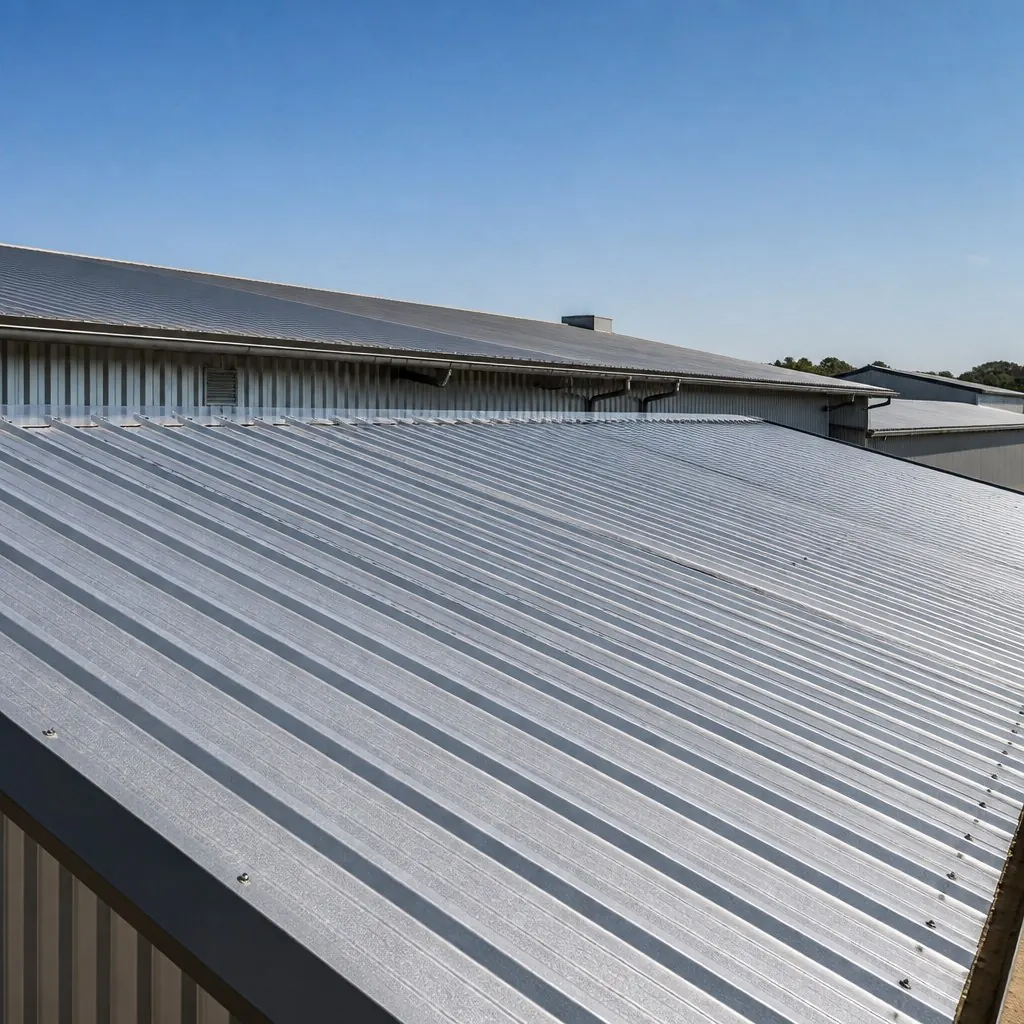
- Roofing and cladding substrates — GI coil is the base for pre-painted (PPGI) profiles. In coastal locations, specify Z275 or consider Galvalume for extended life.
- Cable trays and support systems — Z180–Z275, usually 0.8–1.5 mm, often with a post-galvanized finish at joints.
- Purlins, studs and light-gauge framing — cold-formed sections where coating weight drives the maintenance interval on exposed frames.
- Fabrication and general engineering — signage, enclosures, cabinets and industrial housings.
The practical rule for the Emirates is simple: if the finished part will be exposed to outdoor air — especially within a few kilometres of the coast — the coating should be Z275 or better, and the surface should be passivated before shipment. If it will be painted after forming, confirm the surface finish with your coating supplier so adhesion is not compromised.
10. Comparing Your Sourcing Options: Mill-Direct, Trader or Stockist
Most GI coil enquiries in the Gulf are ultimately answered by one of three supply routes, and the right choice depends less on the headline price than on how much flexibility and traceability the order actually needs. The table below sets out how the three differ in practice.
| Consideration | Mill-direct manufacturer | Trading company | Local stockist |
|---|---|---|---|
| Price level | Lowest — no intermediary margin | Typically 3–8% above mill level | Highest — carries stock, handling and local cost |
| Minimum quantity | 25 MT per size, full container loads | Lower minimums; can consolidate mixed sizes | Smallest quantities, often by the coil or sheet |
| Specification flexibility | Full — coating weight, width, slitting, cut-to-length, surface treatment | Limited to what a mill already produces | Restricted to what is in stock |
| Traceability | MTC to EN 10204 3.1 with heat number linked to the coil | Documents pass through a second party | Often re-issued; original heat data may not follow |
| Lead time | 15–25 days production plus sea transit | Adds handling and consolidation time | Immediate for stock items |
| Inspection access | Third-party inspection before loading at the mill | Inspection arranged remotely | Inspection after arrival only |
| Best suited to | Project orders and repeat programmes where cost and specification control matter | Buyers needing smaller mixed orders | Urgent repairs and small top-ups |
A second comparison matters just as much in the Gulf: an integrated multinational mill group against a direct Chinese manufacturer. Multinational producers are strong where a project specification names a producer, where a long-standing brand approval already exists, or where financing is tied to a particular supplier list. A direct Chinese manufacturer competes on cost, on the willingness to run non-standard coating weights and widths, and on combining several sizes or finishes in one shipment. Neither route is universally better — the deciding questions are whether your specification names a producer, and whether your schedule can absorb a production lead time.
Five questions separate a capable supplier from a brochure: can you quote the exact coating weight and thickness tolerance in writing? Will the MTC carry the heat number through to the coil? Who inspects before loading? What happens if the coating weight tests low on arrival? And can you name three projects in my market using this specification? A supplier who answers all five without hesitation is worth a trial order.
Related reading: to compare the pre-painted alternative and how its coating systems are specified, see our PPGI coil manufacturer guide. For the background on zinc coating designations and how they are applied, the Z275 galvanized steel coil guide covers the specification in full.
11. Frequently Asked Questions
What is the minimum order quantity for GI coil?
The MOQ is typically 25 metric tons per size. Mixed sizes within a single container load are accepted, which is the usual arrangement for distributors and contractors ordering more than one thickness or width. Sample orders for project approval can be arranged before a full production run.
How much does GI coil cost in the UAE?
A delivered GI coil price is built from six components: the base steel price, the zinc cost (driven by the LME zinc price and coating weight), processing, inland freight and loading, sea freight and surcharges, and documentation or inspection services. Because the first two components move with global markets, quotations are valid for a defined period rather than indefinitely. Send us your thickness, width, coating designation, tonnage and destination port and we will return a costed quotation, normally within 24 hours.
What is the difference between Z120, Z180 and Z275 coating?
The number states the total zinc coating weight on both surfaces combined, in grams per square metre: Z120 = 120 g/m², Z180 = 180 g/m², Z275 = 275 g/m². In practical terms Z275 carries roughly 2.3 times the zinc of Z120 and lasts correspondingly longer in humid, saline conditions. Z120 suits indoor ductwork; Z180 suits semi-exposed inland applications; Z275 is the standard choice for coastal and outdoor UAE projects.
How many tons of GI coil fit in a 20GP and a 40HQ container?
A 20GP container takes approximately 25–27 metric tons of GI coil, and a 40HQ takes approximately the same 25–27 metric tons. Steel coil is weight-limited rather than volume-limited, so the extra volume of a 40-foot high-cube container is rarely usable. Buyers seeking to reduce freight cost per ton gain more from consolidating sizes into one container than from upgrading container size.
How long does production and shipping to the UAE take?
Production typically takes 15–25 days after specification and deposit confirmation, and sea transit to Jebel Ali, Khalifa Port or Sharjah runs 18–25 days. Heavy coating weights such as Z275 run more slowly on the galvanizing line than light coatings, and public holidays in China and the Gulf compress effective working days, so firm project dates should be booked early.
Can GI coil be supplied slit to width or cut to length?
Yes. Slitting and cut-to-length lines operate in-plant, so coil can be supplied slit to your exact width or converted to flat sheets before shipment. Supplying the material pre-cut reduces on-site processing, waste and handling for fabricators, and is commonly arranged for ductwork and roll-forming customers.
What documents are included with a GI coil shipment?
Every shipment includes a mill test certificate to EN 10204 3.1 with heat number, chemistry, mechanical properties and coating weight test values; a commercial invoice and packing list showing coating designation, dimensions and weights; a certificate of origin; and loading photographs showing stowage and strapping. A bill of lading and insurance certificate are issued according to the agreed Incoterm. Certification for onward export to Saudi Arabia can be supported where required.
Can third-party inspection such as SGS, BV or TUV be arranged?
Yes. Inspection can be arranged at the factory before loading, or at the destination port after arrival, depending on your project’s quality plan. For UAE projects, pre-shipment inspection at the mill is usually the more economical option, because any issue is resolved while the material is still in production control rather than after a 20-day sea voyage.
Send Us Your GI Coil Specification
Tell us the thickness, width, zinc coating, tonnage and destination port. You will receive a costed quotation, the MTC format, and a container loading plan for your specification — usually within one business day. Arabic and French enquiries are welcome.
Request a Quote
Chat on WhatsApp
Direct factory supply from Tianjin, China · MTC with every shipment · Shipping to Jebel Ali, Khalifa Port, Dammam, Jeddah, Hamad Port and Sohar